In the high-stakes world of B2B sales, speed and precision are the currencies of success. Yet, many sales organizations are still hampered by disconnected spreadsheets, static price lists, and manual calculations. When selling complex products, this friction doesn’t just slow you down—it loses revenue. This is where CPQ automation changes the game or CPQM (CPQ for Manufacturing).
For companies navigating complex pricing structures or offering highly customizable solutions, the ability to generate quotes quickly and accurately is a competitive necessity. CPQ software (Configure, Price, Quote) has evolved from a niche tool into a critical piece of business software for modern enterprises.
This guide explores how automation transforms the sales process, the specific benefits of CPQ, CPQM (CPQ for Manufacturing), and why using CPQ software to automate the sales process is beneficial for businesses. CPQ for manufacturing and engineering is revolutionizing how complex deals are closed.
What is CPQ Automation?
CPQ automation is a software solution that streamlines the entire sales process by automatically configuring complex products, calculating precise pricing based on real-time rules, and generating professional quotes instantly.
At its core, a CPQ process with automation allows for streamlined operations. CPQ system manages the three most critical steps of the revenue journey:
-
Configure: The software allows sales reps (or customers via self-service) to select product features and options. Guided selling logic ensures that every configuration is technically valid, preventing incompatible combinations (e.g., ensuring a specific motor fits a chosen frame).
-
Price: The engine applies complex pricing logic, including volume discounts, bundles, contractual terms, and partner-specific margins. It ensures every price quote is accurate without manual lookups or calculator errors.
-
Quote: The system automatically generates a branded, professional proposal or document, ready for signature.
Why Automation Matters
The “A” in CPQ automation is what separates modern solutions from static digital catalogs, especially when using CPQ software to automate the sales process. Automation makes it possible to handle thousands of business rules simultaneously. It automates the configure price quote workflow so that approvals, discount thresholds, and Bill of Materials (BOM) generation happen in the background.
CPQ automation streamlines operations, allowing your sales team To focus on selling rather than fixing spreadsheets, consider using CPQ software to automate your sales process. Discover how CPQ automation eliminates the administrative bottleneck, ensuring that the sales cycle moves as fast as your customers expect.


The Benefits of CPQ Automation
Why are high-performing organizations rushing to adopt CPQ applications? The benefits of CPQ automation extend far beyond just saving time on data entry. Your business can grow by implementing CPQ quote automation to speed up workflows and improve efficiency, eliminating the bottlenecks of manual processing.
1. Accelerate the Sales Cycle
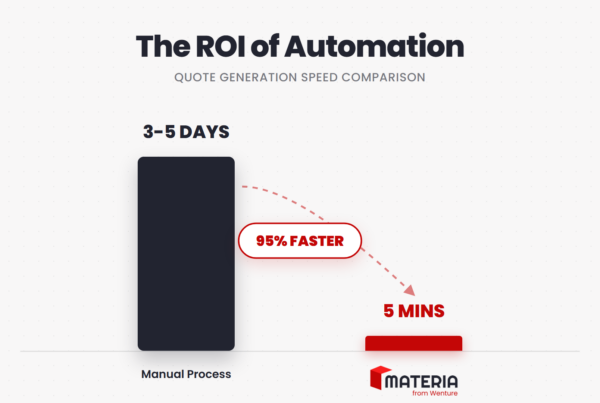
One of the primary benefits of CPQ is speed. Automation can save hours—or even days—per quote. By using CPQ, sales reps can generate quotes in minutes, often while still in a meeting with the client, rather than waiting days for technical review. This speed drastically shortens the sales cycle, helping you close deals before competitors can even submit their initial proposals.
2. Eliminate Errors and Protect Margins
Manual quoting (Excel) is notoriously prone to human error. A misplaced decimal, an outdated price list, or a forgotten dependency can cost a company thousands in margin erosion. Advanced quote configurator software allows you to lock down pricing rules and discount floors. CPQ improves accuracy by ensuring that every discount and product configuration is pre-validated against the latest data. Accurate quotes mean protected margins and fewer uncomfortable conversations with clients regarding pricing “mistakes.”
3. Elevate the Buying Experience
Today’s B2B buyers expect a frictionless, B2C-like buying experience. Modern CPQ tools often include 2D or 3D visual configurators that allow customers to see exactly what they are buying. CPQ provides a seamless, professional interaction that builds trust. Discover how CPQ turns a transactional quote into a collaborative design process, boosting customer satisfaction.
4. Streamline Sales and Operations
CPQ automation bridges the often-widening gap between sales and operations. When a quote becomes an order, CPQ software integrates with your ERP systems to pass clean data directly to production. This workflow automation reduces administrative overhead and ensures that the product configuration sold is exactly what gets manufactured. CPQ helps align the entire organization around a single source of truth using CPQ’s automation capabilities.
Manual Quoting vs. CPQ Automation
Many businesses still rely on Excel or legacy systems to manage their pricing. The table below outlines the stark difference between manual quoting (Excel) and CPQ automation:
Who Needs CPQ Automation Most?
While any business with a variable pricing model can benefit from better tools, CPQ automation is an absolute necessity for industries dealing with high technical complexity and customization. In these sectors, the cost of a mistake is not just a lost sale—it is a production error that can cost thousands in wasted materials and labor.
The two industries that see the highest ROI from implementing CPQ software are Manufacturing and the Construction/Engineering sector.
1. CPQM (CPQ for Manufacturers)
For manufacturers, particularly those in the “Configure-to-Order” (CTO) or “Engineer-to-Order” (ETO) space, the sales cycle is inextricably linked to engineering constraints. Relying on static price lists or legacy spreadsheets often leads to a disconnect between what the sales team promises and what the factory can actually build.
CPQ for manufacturing acts as the bridge between commercial intent and technical reality. By digitizing the rules of production, manufacturers can empower sales reps to configure highly tailored solutions without constant back-and-forth with the engineering department.
Key Benefits for Manufacturing:
-
Automated Bill of Materials (BOM) Generation: One of the biggest bottlenecks in manufacturing sales is translating a customer’s wish list into a manufacturing BOM. CPQ automates this, ensuring that every screw, panel, and motor selected in the product configuration is accurately reflected in the data sent to the ERP.
-
Handling Complex Dependencies: When selling a complex product—such as industrial machinery or custom HVAC systems—changing one component often requires changes to three others. CPQ software includes logic that automatically enforces these rules (e.g., “If Motor A is selected, Frame B must be used”), which significantly helps reduce errors in the final order.
-
Real-Time Costing: Volatile raw material costs can erode margins if pricing isn’t updated instantly through the CPQ process. CPQ software integrates with internal cost databases to ensure that dynamic fabrication costs are factored into the price the customer sees.
2. CPQ for Construction & Engineering
In the construction and engineering sectors, bidding is a race against time. However, speed cannot come at the expense of precision. A calculation error in an Excel spreadsheet can lead to underbidding a project, turning a potential profit into a financial liability.
CPQM (CPQ for Manufacturing) transforms the estimation process from a manual administrative burden into a strategic advantage. It allows companies to standardize their estimating logic, ensuring that every project manager or estimator is quoting based on the same approved margins and labor rates.
Key Benefits for Construction & Engineering:
-
Rapid Bidding and Estimation using CPQ software helps streamline the sales quotes process. In competitive bidding, being the first to submit a professional proposal often dictates who makes the shortlist. CPQ tools streamline cost estimation by pulling current labor and material rates automatically, allowing teams to turn around bids in hours rather than days.
-
Standardized Sales Process: Large engineering firms often struggle with rogue quoting, where different regions use different templates and pricing standards. CPQ enforces a unified sales process, ensuring every bid complies with corporate governance and margin requirements.
-
Eliminating Scope Creep: CPQ automation allows for better control over project parameters. By generating a highly detailed and accurate quote that specifically outlines what is included (and what is not), CPQ helps protect firms from scope creep during the execution phase. The generated documentation serves as a clear, binding agreement that aligns all parties.
How CPQ Automation Works
Implementing a A CPQ solution simplifies the management software needed for effective sales quotes. involves setting up the rules that govern your sales automation. While the backend logic can be complex, the user experience is designed to be simple. Here is the typical workflow when using CPQ software:
-
Product Configuration: The sales rep (or the end-customer) answers a series of questions. Guided selling prompts them through the options, filtering out irrelevant choices. AI-powered automation can even suggest cross-sells or up-sells based on the selection, helping to maximize deal value.
-
Dynamic Pricing: As options are selected, the pricing updates in real-time. CPQ automates the calculation of bundles, volume discounts, currency conversions, and recurring revenue models. CPQ supports even the most complex pricing schemas that would be impossible to manage manually.
-
Approval Workflow: If a rep applies a discount that exceeds their authorized limit, the automation platform automatically triggers an approval request to their manager. The quote is locked until approved, ensuring compliance and facilitating quote automation.
-
Quote Generation: The CPQ tool compiles all data into a polished PDF or digital proposal. Document automation ensures terms and conditions, specs, and images are correct for that specific configuration.
-
Order Execution: Upon acceptance, the data flows to the CRM (to mark the deal won) and the ERP (to start fulfillment).
What is Visual CPQ for Manufacturers?
Visual CPQ takes standard automation a step further by adding a real-time 2D or 3D visual layer to the quoting process. Instead of just selecting part numbers or features from a list, users see a dynamic rendering of their product update instantly as they make changes.
By implementing visual CPQ, you eliminate ambiguity, ensuring the customer knows exactly what they are buying before they sign. This visual validation drastically reduces order errors and builds immediate trust. For industries like construction and manufacturing, where accurate specs are non-negotiable, Visual CPQ acts as the bridge between a digital quote and the physical reality.
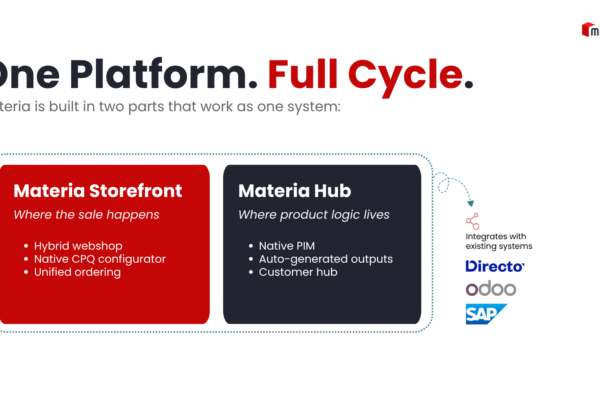
Integrating CPQ with CRM, ERP, and PIM
For CPQ automation to be truly effective, it cannot stand alone. CRM and ERP integration is non-negotiable.
-
CRM Integration: Sales teams work in their familiar environment (like Salesforce or HubSpot). Salesforce CPQ automation allows for more efficient quote generation. or CPQ platforms like Materia from Wenture integrate directly, meaning reps never have to leave their dashboard.
-
ERP Integration: Once closed, the CPQ system sends the order data to the ERP systems, triggering production without manual re-entry. This integration between CRM and ERP systems is vital for maintaining data integrity.
While your ERP manages financials, it is often not built to handle complex product descriptions. This is where a Product Information Management (PIM) system comes in. By integrating CPQ with your PIM system, you ensure that the technical specs sent to manufacturing match exactly what was sold to the customer.
Real-World Use Cases of Materia CPQ Solution
Here are some examples of companies that have successfully implemented CPQs.
1) Solarstone – Smarter Solar Panel Sales
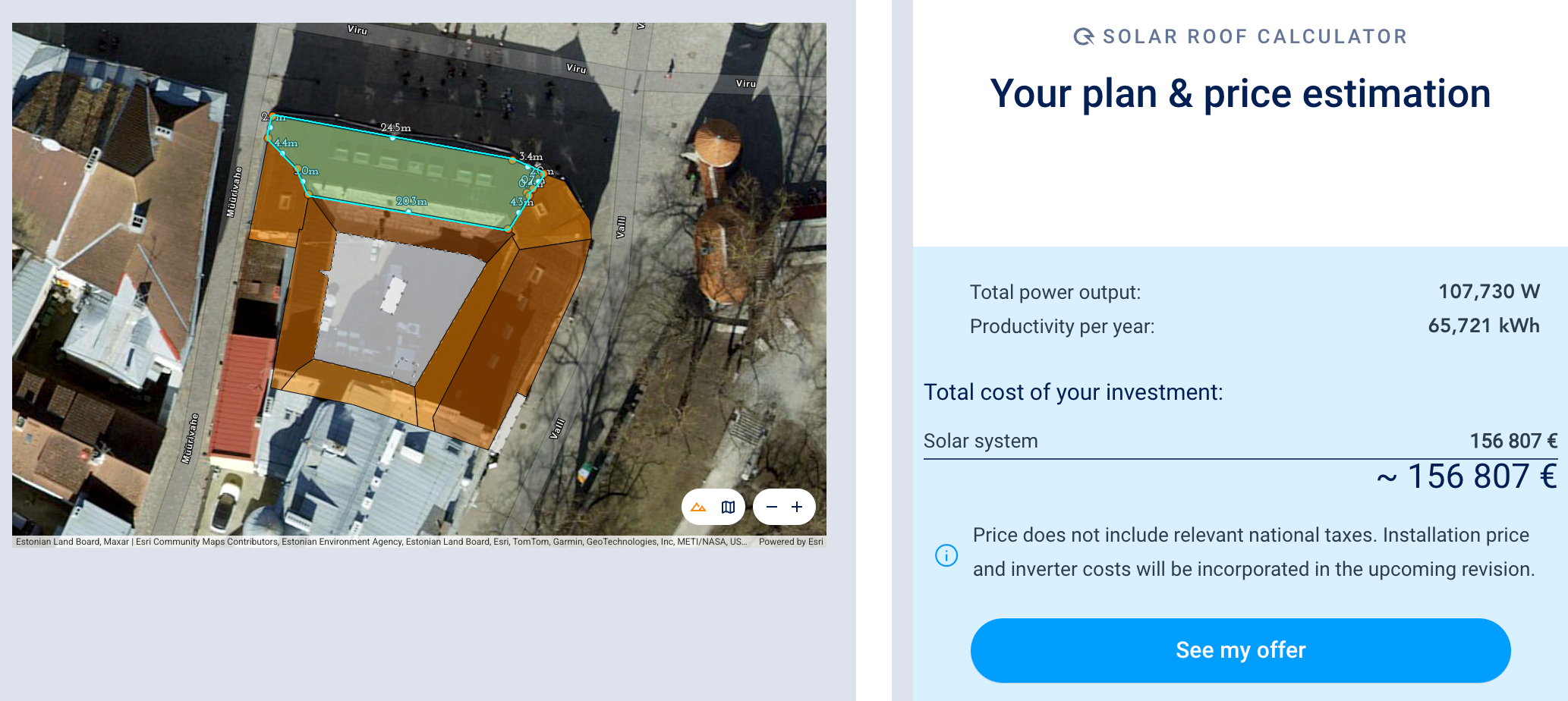
Solarstone integrated our B2C and B2B quoting software to enable self-service configuration of rooftop solar systems. The tool allows users to place solar panels virtually on a photo of their roof, choose system components, and see immediate pricing and performance estimates—without involving a salesperson.
Results:
- Shortened sales cycle from days to hours
- Enhanced buyer confidence through visual simulation
- Increased inbound qualified quote requests
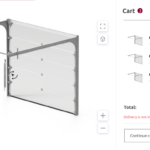
2) Saku Metall – Garage Door Configurator
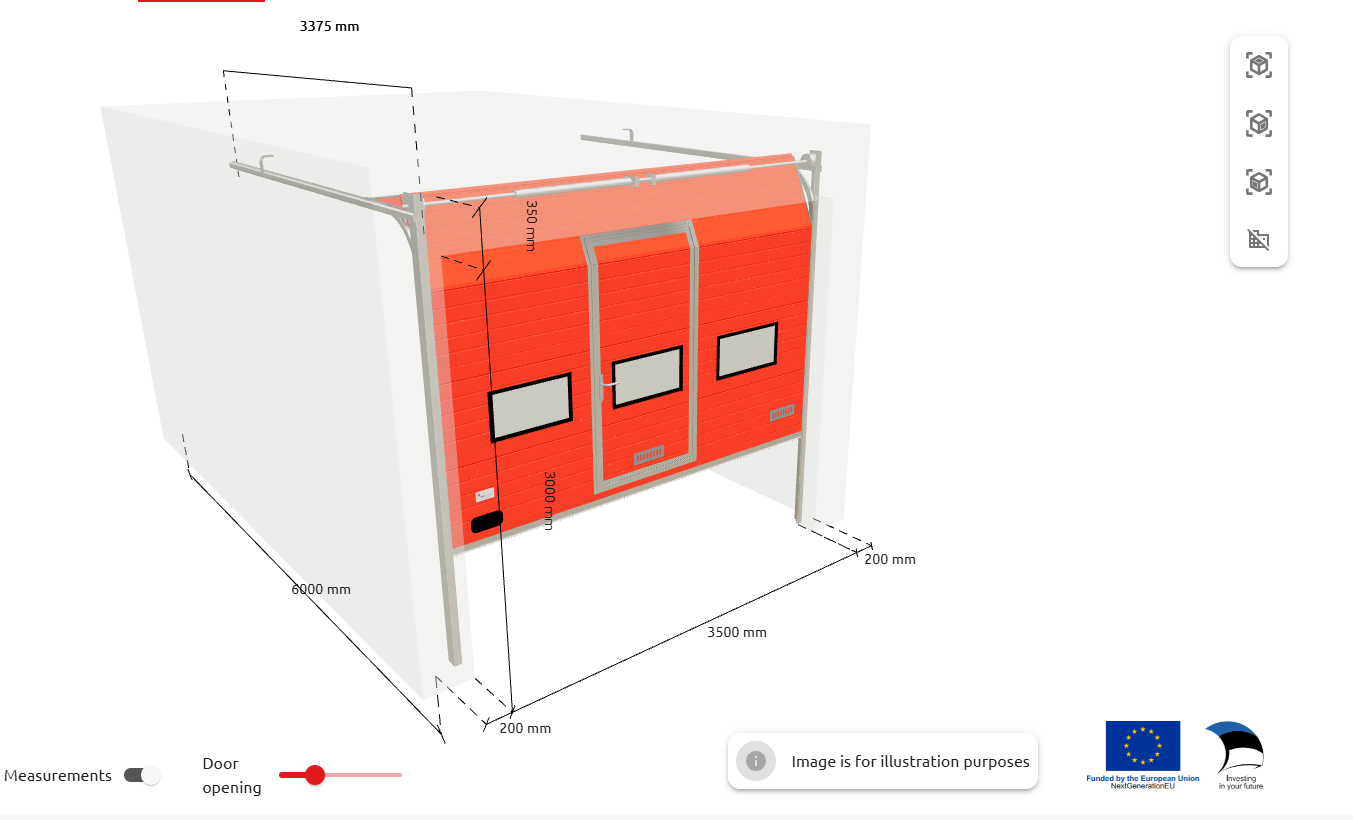
Saku Metall, a manufacturer of industrial and residential garage doors, implemented Materia CPQ to improve the customer journey for door selection and ordering. The configurator walks users through size selection, material, color, window placement, and hardware options. Previously a manual and error-prone process, quoting is now instant and visually guided.
Results:
- Fewer quote revisions due to improved order accuracy
- Simplified experience for architects and end-users
- Clearer communication between sales, production, and logistics teams
3) R-Fix – Glass Railings & Canopies Configurator
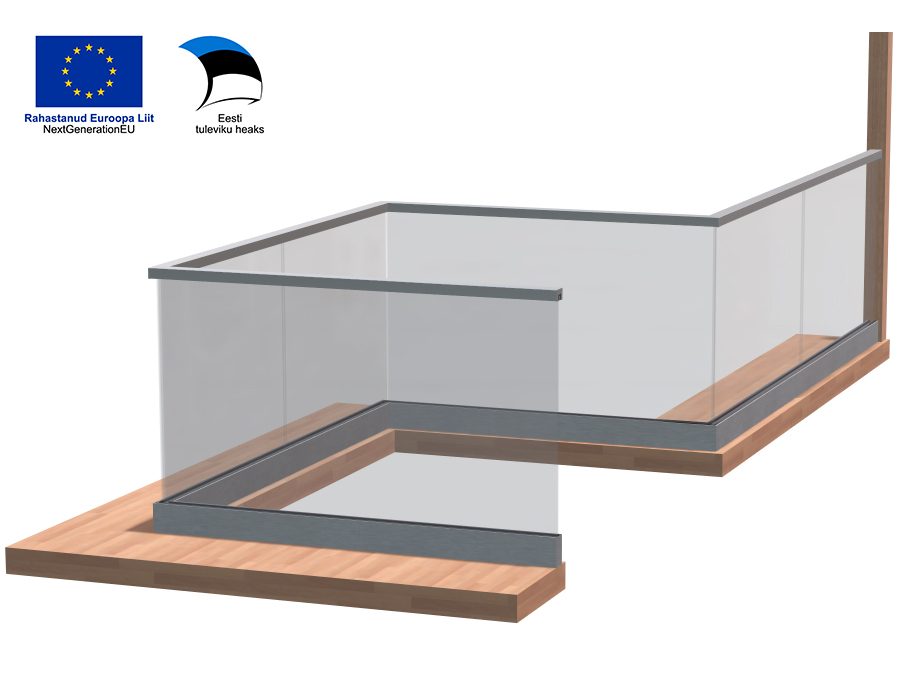
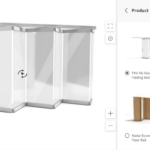
R-Fix, a leading provider of architectural glass solutions, has launched an advanced visual product configurator powered by Materia CPQ. This tool modernizes the design and ordering experience for both professionals and end-users by making the process faster, more visual, and more accurate.
The configurator lets users design custom glass railings and canopies with precise specifications, visualize their choices with photorealistic accuracy, and access real-time pricing while saving their configurations for future reference.
Results:
-
Enhanced accuracy in orders, reducing the need for revisions
-
Improved experience for architects, builders, and homeowners
-
Streamlined communication between sales, production, and logistics
Key Features of Materia CPQ Software (CPQ for Manufacturing)
3D Visual Product Configuration
Empower customers and sales teams to configure products interactively. The built-in 3D product configurator ensures only valid combinations are selected, significantly reducing quoting errors and speeding up the sales process.
Dynamic Pricing Engine
Deliver real-time, rule-based pricing that adapts to quantities, customer types, discounts, and margin objectives. Say goodbye to static price lists and approval delays—every quote reflects live business logic.
Integrated PIM (Product Information Management)
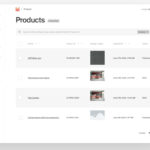
Manage all product data—features, variants, pricing, stock levels—from a single, centralized source. Materia includes:
-
Real-time and branded product data sheets
-
Excel import/export
-
SKU and inventory management
-
Full support for product hierarchies
Export-ready formats for production and BIM workflows
Materia CPQM (CPQ for Manufacturing) supports the generation and export of key file types, including:
-
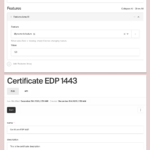
PDF drawings ready for production or customer inquiries
-
CAD files such as dwg and dxf for detailed 2D documentation
-
BIM models in formats like ifc and rvt for integration with tools like Revit
-
BoM lists (Bill of Materials) to support manufacturing and procurement processes
ERP, CRM & eCommerce Integrations
Materia CPQ software integrates seamlessly with platforms like Microsoft Dynamics, Infor, and your existing ERP/CRM stack, enabling CPQ integration with ERP and CRM for accurate data flow.
B2B Partner Portal
Let logged-in B2B partners browse, configure, and order products with their own pricing tiers. Orders can be managed through Materia’s back office or synced with your BMS via integration.
Scalable and White-Label Ready
Whether used internally or as a customer-facing tool, Materia adapts to your business model. It supports multiple brands, regions, and pricing structures and is ready for white-label deployment.
Robust Core Architecture
Materia’s core platform includes:
-
REST & GraphQL API access
-
File storage (PDF, images, videos, CAD/BIM models)
-
Email automation (e.g. orders, notifications)
-
Multi-language localization
-
Role-based user and access management
-
Identity management for external system use
-
BI dashboard for real-time analytics
Comparison: Materia CPQ vs Other CPQ Tools for Manufacturers
This table provides a configure price quote tools comparison across leading CPQ platforms including Materia, Salesforce, Infor, and Microsoft Dynamics.
| Feature | Materia CPQ | Salesforce CPQ | Infor CPQ | Microsoft Dynamics CPQ |
|---|---|---|---|---|
| Visual configurator | ✅ | 🟡 (Limited) | ✅ | 🟡 (Requires customization) |
| Integrated PIM | ✅ | ❌ | 🟡 (Partial) | ❌ |
| Digital asset management | ✅ | ❌ | ❌ | ❌ |
| Best for manufacturers | ✅ | ❌ (Focused on SaaS) | ✅ | ❌ (Large enterprises) |
| White-label option | ✅ | ❌ | 🟡 (Partial) | ❌ |
| ERP/CRM integration | ✅ | ✅ | ✅ | ✅ |
| Dynamic pricing engine | ✅ | ✅ | ✅ | ✅ |
| Export-ready formats (PDF, CAD, BIM, BoM) | ✅ | 🟡 (Limited) | ✅ | 🟡 (Limited) |
| Partner portal | ✅ | 🟡 (Partial via partner tools) | ✅ | 🟡 (Custom integration) |
| API access (REST & GraphQL) | ✅ | ✅ | 🟡 (Limited) | 🟡 (Limited) |
| Multi-language support | ✅ | ✅ | ✅ | ✅ |
| User & access management | ✅ | ✅ | ✅ | ✅ |
| Built-in analytics dashboard | ✅ | ✅ | 🟡 (Limited) | ✅ |
Best Practices for CPQ Implementation for Manufacturers
To fully realize the benefits of CPQ software, successful implementation is key. It is not just about installing software; it is about refining your sales operations process with CPQ..
-
Define Your Goals: Are you trying to reduce errors, increase deal size, or speed up the quote process? Clear KPIs help measure success.
-
Clean Your Data: CPQ software provides structure, but it requires clean data to function. Audit your product lists, SKU hierarchies, and pricing rules before importing them. CPQ software without clean data will only automate chaos.
-
Focus on Adoption: Software adoption of CPQ systems can significantly improve efficiency in generating sales quotes. is critical. Involve sales reps early in the process to ensure the tool meets their actual needs. CPQ makes the entire quote automation process faster and more accurate for sales teams. their lives easier, so highlight that value proposition to drive usage.
-
Integrate Wisely: Ensure your sales tool is integrated with CPQ’s automation for optimal performance. CPQ software integrates with your existing tech stack. A siloed CPQ limits the potential for efficiency. The goal is for the software integrates seamlessly so data flows invisibly.
-
Start Simple: You don’t need to automate every single edge-case exception on day one. Launch with your core product lines and expand. Common CPQ pitfalls include trying to boil the ocean in the first phase.
Conclusion: Transform Your Sales Process
The days of relying on spreadsheets and manual checks are fading. CPQ automation is no longer just for industry giants; it is an accessible, essential tool for any B2B company looking to streamline operations and close deals faster.
By adopting CPQ software, you empower your sales team to act as trusted advisors, delivering accurate quotes and a superior buying experience. Whether you are using Salesforce CPQ, Materia from Wenture, or another automation tool, the goal remains the same: to remove friction and drive growth.
Discover how CPQ software can revolutionize your business. If you are ready to automate the configure price quote process and leave manual errors behind, the time to act is now. CPQ automation can help you build a scalable, resilient sales engine for the future. Book a demo or contact us for a tailored walkthrough.